

Stories · Argentina, Baja, San José
The surfer who chose to stay after Odile
Andres Kayo grew up far from the sea, but followed the call of the water from Argentina through Central America, Indonesia, and Australia before choosing Baja. Today he teaches surfing as a way to connect deeply with the ocean.
Palmilla Journal
8 minute read
I · Distant rivers
Andres Kayo was born in Argentina, “near the rivers, very far from the sea.” Since then, water has been present like a kind of quiet thread in his life. There were no waves or salty foam, but there was current, reflections, and that sense of constant flow that intrigued him. He remembers it simply, without adornment, as something that was just there, accompanying him.
He says that even without the ocean, “water always caught my attention.” He’s not talking about a dramatic moment of revelation, but about a curiosity that grew along with him. The landscape was rivers, not beaches, but even then there seemed to be something in the movement of the water that stopped him in his tracks, that made him watch. That early attention to the details of water would later become a central part of how he understands surfing and how he teaches it.
In his memory, there’s a very clear before and after: “I remember the first time I saw the ocean, I was about six, and from then on I always felt that calling.” That first sight of the horizon changed the scale of everything. From the nearby rivers he went to an immense, open body of water that didn’t end at the other shore. That contrast between the contained and the infinite shaped his way of looking at the ocean and, later on, of deciding where he wanted to live.
II · The first calling
When Andres remembers that first encounter with the ocean “when I was about six,” he mentions it like someone talking about a threshold. He doesn’t describe colors or specific details, but he does make it clear that something woke up in him then. From that moment on, he says, “I always felt that calling.” It wasn’t surfing yet, nor a life project by the ocean. It was simply a child’s certainty that there was something important there for him.
That calling slowly slipped into small decisions: trips, books, conversations, until it turned into action. Over time, surfing appeared as a concrete way to step into that space that had sparked so much curiosity. But even when he talks today about his life in the sea, the word that comes back over and over is “connection” — not performance, not competition, not feats.
That early seed also explains the patience with which he relates to people who are getting on a board for the first time. He knows what it’s like to look at the water from afar, to feel it present and at the same time out of reach. That’s why his sessions, as he’ll later say, are “a quiet conversation between the ocean and your truest self,” and not a race to stand up on a wave at all costs. The priority is for each person to have their own “first calling,” at their own pace, without forcing it.

III · Surf routes
Surfing took Andres much farther than that Argentine kid could have imagined. “Surfing took me to places like Central America, Australia, Indonesia, very beautiful places, very different cultures,” he says. He doesn’t dwell on beach names or dates, but on what those trips meant for his way of being in the water.
In Central America he discovered a different closeness between the ocean and everyday life. In Australia and Indonesia he found established surf communities, with long lines of waves that seem drawn for learning to read the sea calmly. Those contrasts forced him to sharpen his eye: different tides, different bottom formations, rules of coexistence in the water that changed from place to place.
The place that marked him most during that period is clear to him: “the place at that time that really captured me was Costa Rica, because that’s where I truly connected with surfing.” He doesn’t mention it just as another dot on the map, but as a turning point. There, surfing stopped being only a sport or an excuse to travel and became a way of being in the world. That experience of connection, more than the technical specifics, is what he now tries to bring into every session he shares with other people in Baja.

IV · Choosing Baja
Andres’ path toward Baja was neither linear nor planned as a final destination. “I chose Baja because I came here thinking I’d just spend some time and then go back to Australia,” he explains. In his mind, it was a temporary stopover before continuing that back-and-forth between distant seas. But the place ended up having other plans for him.
Just a few months after he arrived, he went through Hurricane Odile, “when I’d only been here a few months.” Odile was one of the most intense storms ever to hit the peninsula, and it marked a before and after in many people’s lives. Andres tells it plainly: “it was a very strong hurricane and at that time it drove a lot of people away from here, a lot of people decided not to live here anymore after that big storm.”
For him, though, the effect was the opposite: “for me, like for many others too — the minority, but still many — I felt a much stronger connection with the place and decided to stay in Baja Sur.” That choice wasn’t a heroic gesture, but something he describes as intimate and renewed: “every day that decision is renewed, that choice, to be here — the waves, the community — it’s something very beautiful.” Baja stopped being a stopover and became a root, a place where the sea and the people around the sea gave concrete meaning to the idea of belonging.
In Andres’s words
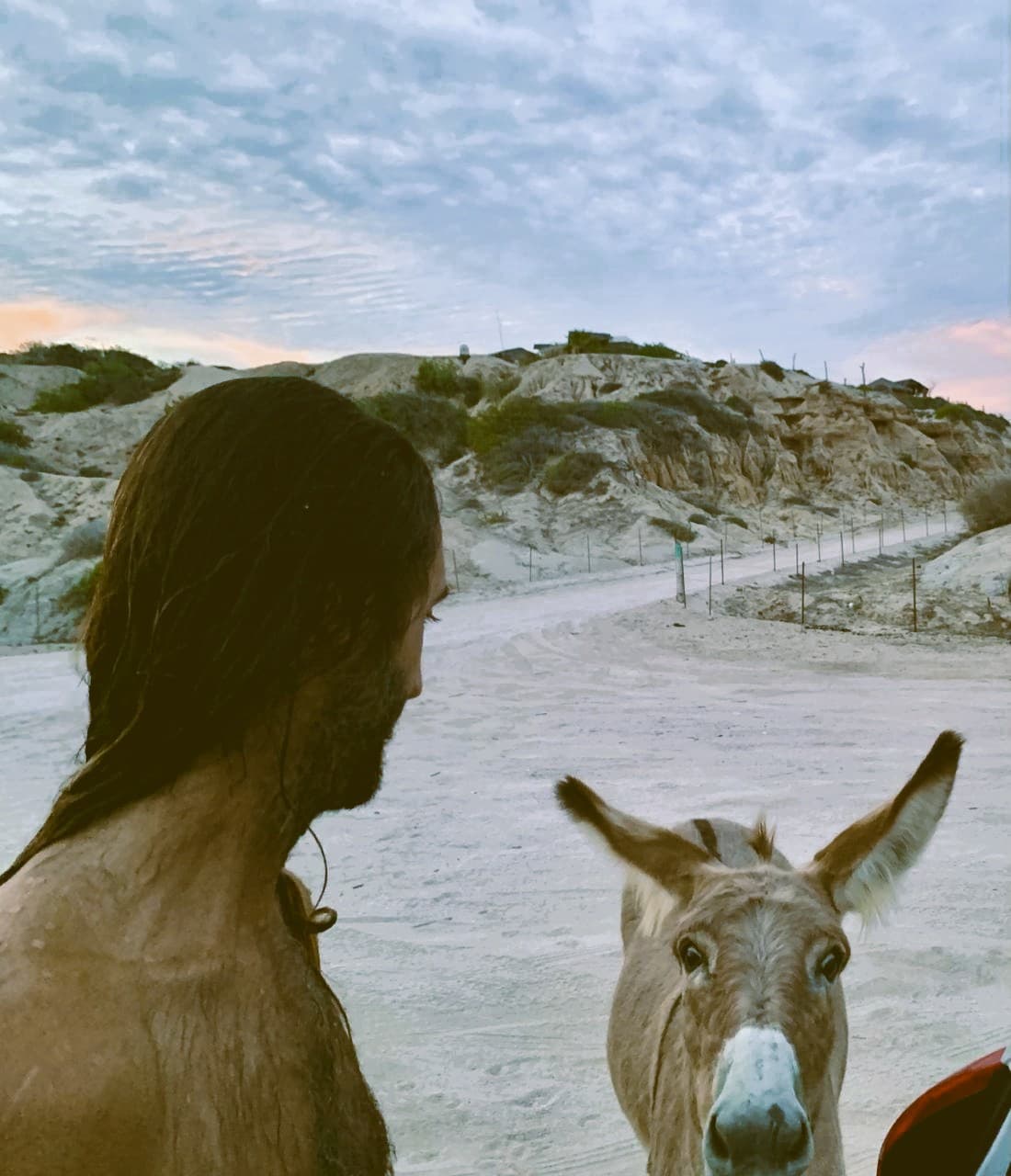
“my wish is that they leave feeling more connected to the ocean.”
Andres Kayo, on what he looks for in each session
V · A secret in the Pacific
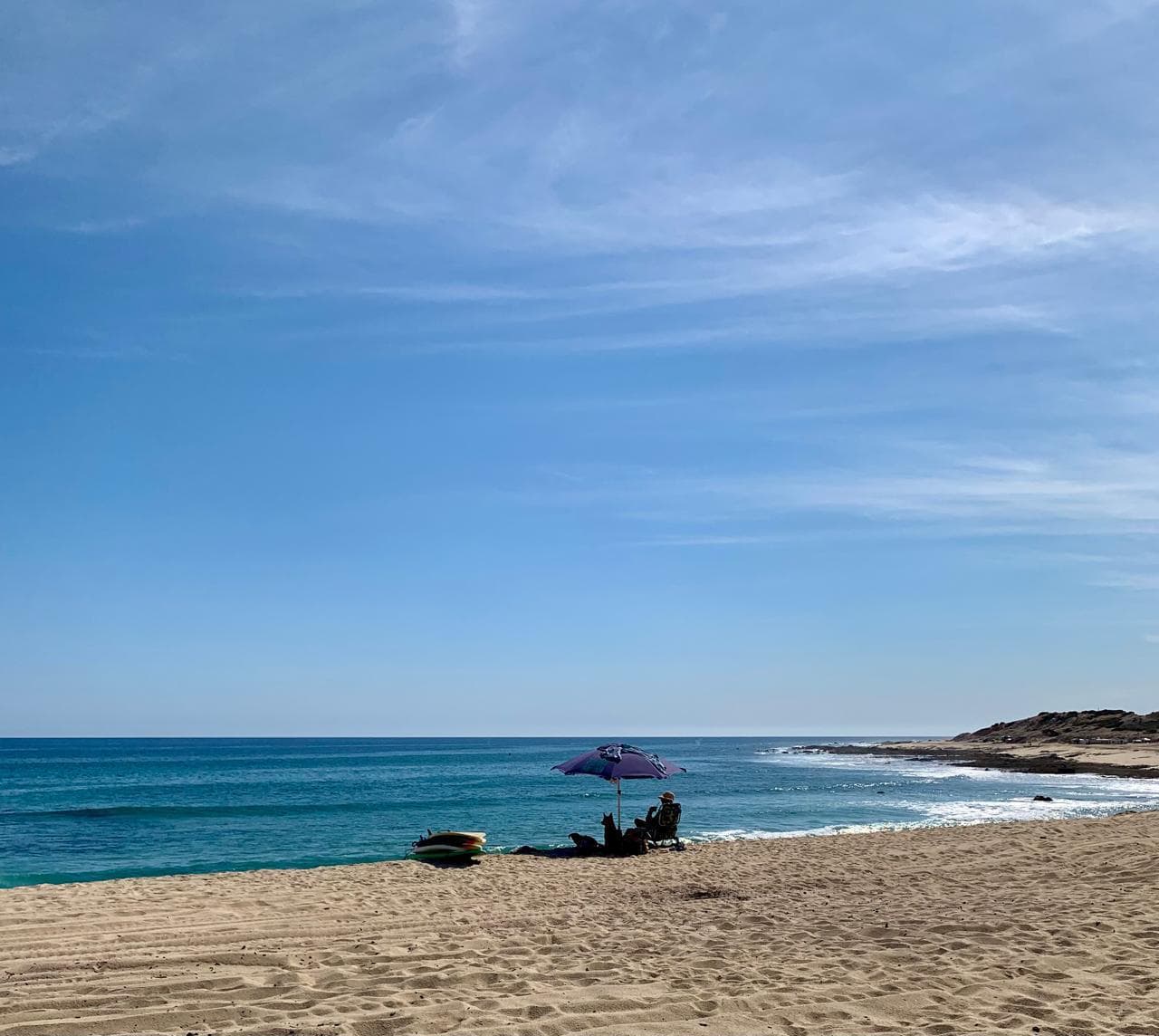
At a secret spot in the Pacific, north of the cabos, which Andres mentions with special care, he finds something very much his own. For those who know it, it’s a place that can draw long, orderly lines when the ocean and wind come together just right. For him, it’s something more intimate. “I think the sessions I have there are the ones that leave me feeling the most complete,” he says.
He doesn’t try to explain the why in exhaustive detail. He calls it “a very magical place for me” and sums up the relationship like this: “I always try to go back.” That secret spot on the Pacific thus becomes more than just a point on the map. It’s a mirror where he measures how he himself has changed, how he feels in the water, how willing he is to listen to what the wave is offering that day.
Those sessions that leave him feeling “more complete” also feed into the way he teaches. Knowing what it means to leave the water with a deep sense of fulfillment gives him a reference point for what he wants his students to experience. Not necessarily there, nor on a big or perfect wave, but in any corner of Baja where that coincidence of ocean, silence, and attention comes together — what he associates with the “magical.”

VI · Sessions as conversation
When Andres talks about his work as an instructor, he chooses gentle words. In his own introduction he describes himself as “surfer, instructor, judge, rooted in Baja,” and he describes a session as “a quiet conversation between the ocean and your truest self.” That idea shapes everything: the structure of the class, the pace, the way he communicates with people coming to the water for the first time.
He doesn’t offer massive classes or noisy environments. He prefers private instruction: “just you (or you and a friend) getting personalized attention throughout the session.” He knows the breaks and conditions in Baja well, and promises to surf “at the optimal times for your skill level.” That attention to detail also shows up in the logistics: boards, rash guards, umbrella, chairs, water, soft drinks, snacks, and fruit are all on him. The person coming only needs to bring “water, sunscreen, swimsuit, maybe a wetsuit or rash guard, and a positive attitude.”
In his words, the most important thing is what he’s trying to share: “what I try to convey is the connection I feel with the sea.” When he answers questions about how to prepare, he suggests watching a few short videos, especially on surf etiquette. It’s not an academic requirement, it’s a way to come to the water with a bit more awareness and respect for those sharing the wave. The focus isn’t on the perfect photo, though he does offer photos from the beach; it’s on each person understanding what’s happening under their feet and all around them.

VII · Teaching how to move with the sea
Andres could stick to the basics: helping someone stand up on the board, correcting their stance, choosing the wave, and calling the class a success. But his own definition of success is different. “I would like the people who have a session with me — beyond the satisfaction of having managed to stand up and surf a wave or improve some technical aspect — really my wish is that they leave feeling more connected with the ocean, or that they’ve achieved that connection,” he explains.
That outlook also shows up in what people say about him. Someone who took a class with Andres later wrote: “he didn’t just teach me to surf, he taught me to move in harmony with the ocean.” That idea of harmonious movement distills what he’s after: not conquering the wave, not imposing a rigid style, but learning to read the rhythm of the water and respond with the body.
To get there, he combines technique with storytelling, patience with moments of laughter. He puts it this way in his profile: “I weave technique with telling stories, patience with laughter, helping you find the essence of the wave and learn to move with the water, not against it.” That phrase, “not against it,” sums up a good part of his philosophy. It applies physically — not fighting the strength of the sea — and also internally: accepting that every session will be different and that learning comes as much from the wipeouts as from those few well-ridden waves.
VIII · From a student
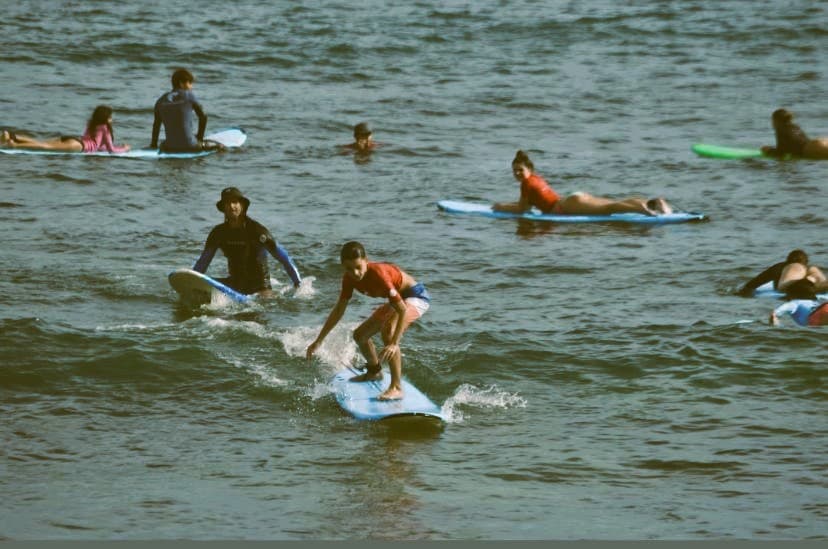
Tonyia Cairns was fifty-seven when she decided to try surfing for the first time. Six months later, she was still going out in the water with him.
“At 57 I decided to test myself and try surfing for the first time. Andrés was the perfect instructor. His passion is contagious, and his positive, patient way made all the difference.”
Tonyia Cairns · Costa Azul, 2026
“Andres didn’t just teach me to surf, he taught me to move in harmony with the ocean. The best instructor and the best person, with a beautiful story.”
IX · Boards, time, and roots
Over the years, Baja stopped being just a backdrop and became home for Andres. He says it naturally: he’s “rooted in Baja.” He surfs “the soft waves of San José and the raw reefs of the East Cape,” two very different faces of the same region. That duality — friendly waves for learning, more demanding breaks for fine-tuning technique — feeds both his own surfing and his way of guiding others.
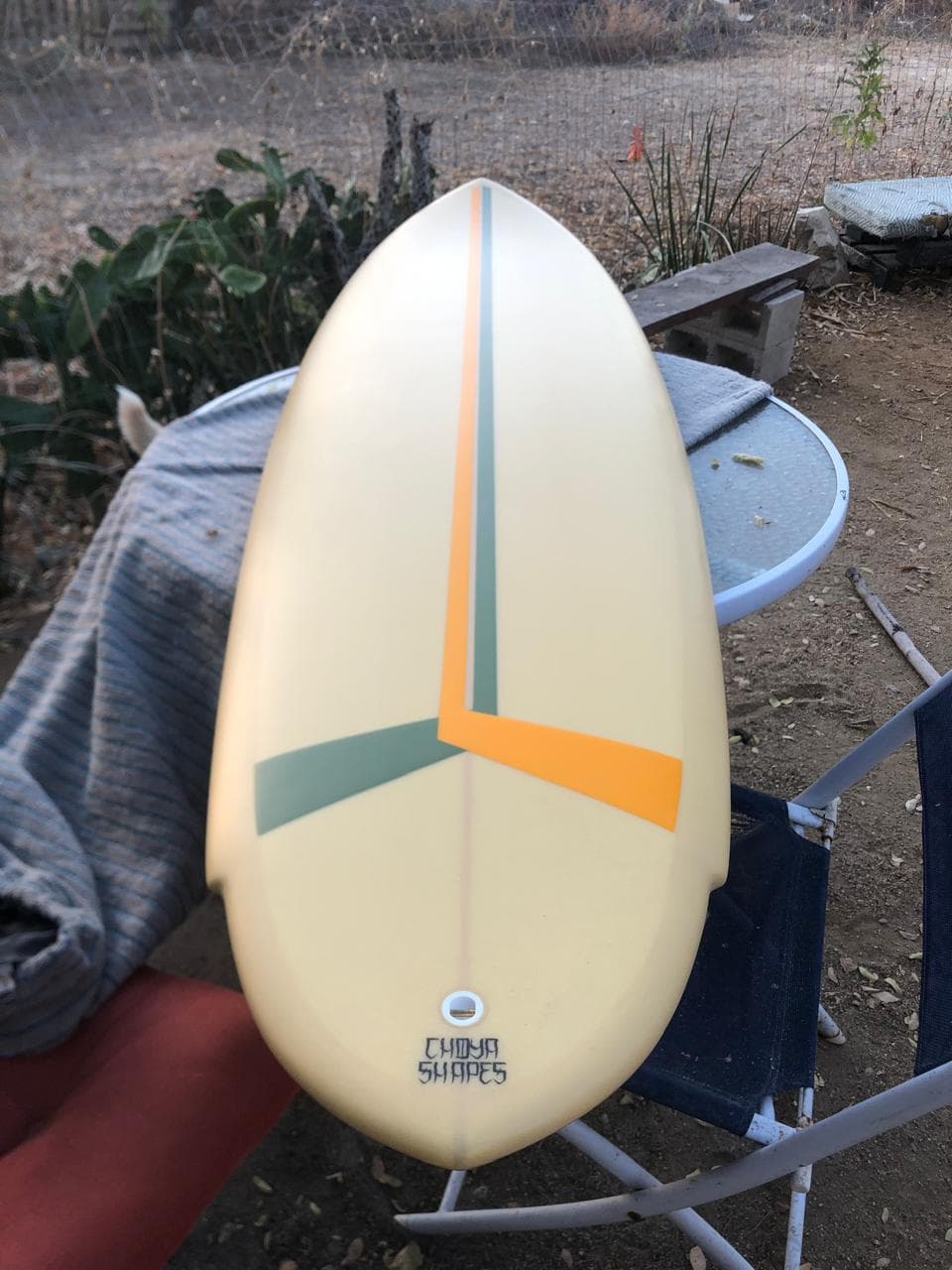
You can also see that balance in the gear he uses and shares. Talking about his main board, he mentions “a twin pin hand-shaped by a local shaper,” a piece that connects classic design with Baja hands. For beginners, he offers boards suited to kids, teens, and people who just want to have fun, with enough volume and stability to build confidence in those first attempts.
His relationship with Baja is renewed, as he himself says, “every day.” Every dawn with waves, every private class, every return to a beloved point on the Pacific reinforces that choice he made after Odile. In his own headline phrase, he sums up what he’s learned through all these years between rivers, distant oceans, and hurricanes: “the ocean rewards connection.” Living and teaching in Baja is, for him, a concrete way to honor that certainty.
Gallery
7 frames




Surf with Andres