

Stories · Cancún, San José
The sea that always gives more
From childhood in Cancún to finding his place in Baja, Tlaca has followed the same compass: the sea always gives. Today he teaches others to lose their fear, read the waves, and leave the water wanting to come back tomorrow.
Palmilla
9 minute read
I · Where it all began
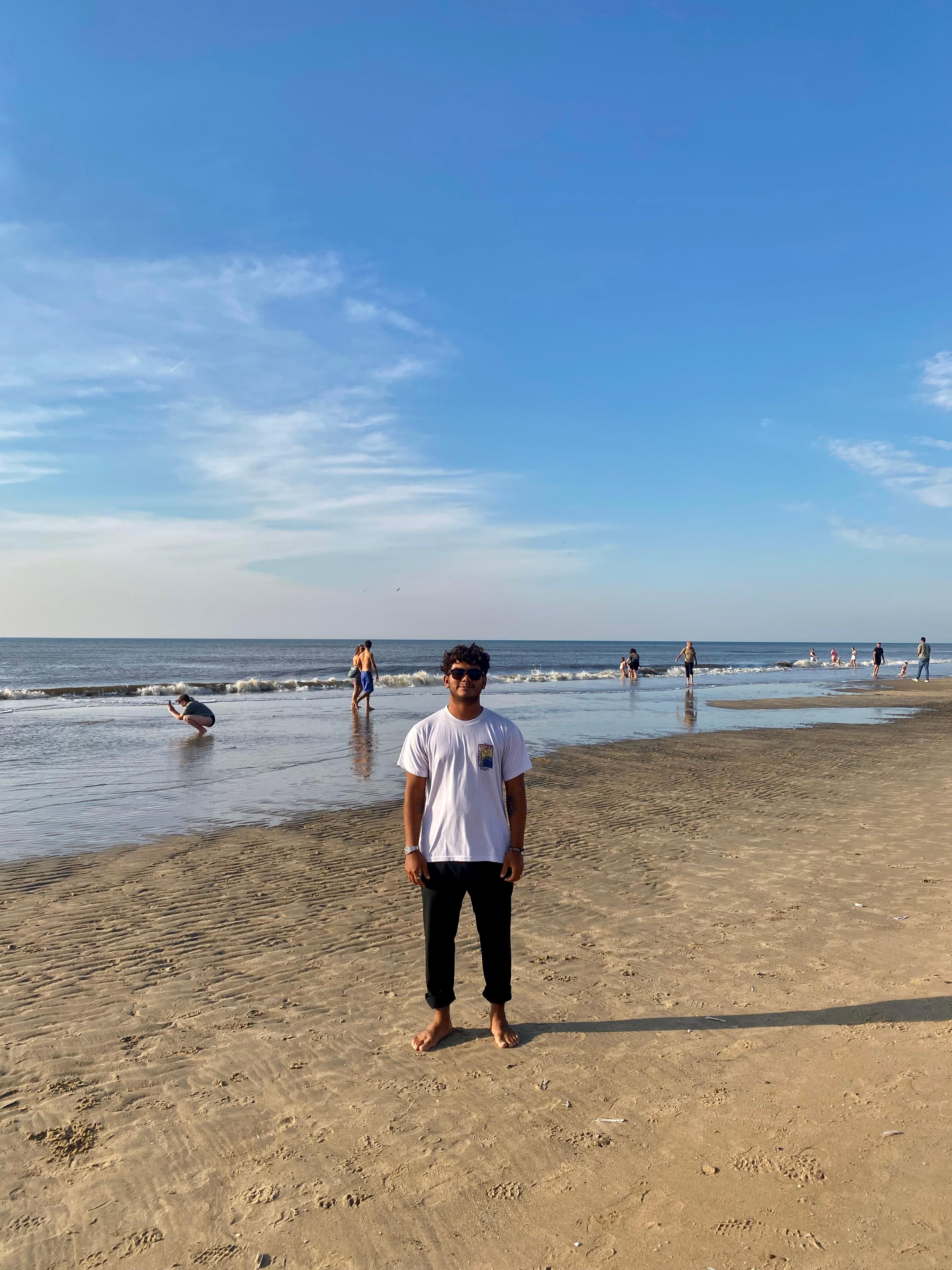
Tlaca always introduces himself from the beginning: “I was born in Cancún, Quintana Roo, and from a very young age I found love and a connection to what’s healthy, because my whole family has always had that same connection and that’s how I grew up.” For him, the sea was never just scenery; it was a kind of silent teacher that you speak to with respect.
He grew up with a very clear idea that he heard and felt many times: “The sea has always meant respect; Mother Nature gives and takes, but the truth is that the sea always gives and has more to offer than to take from you.” He doesn’t say it as a pretty phrase, but as something learned through many hours in the water, from seeing how unpredictable and how generous the ocean is.
From a young age, his life was built around outdoor activities. He sums it up simply: “From a very young age, I was always involved in outdoor activities and most of them have always been in the sea.” There he found play, refuge, and a kind of inner compass. That sum of moments led him, with no written plan, to the point where today he can say naturally: “The sea has given me some of the best experiences of my life, it has given me the relaxation I need, and today I make my living from it.”
II · Learning to read the sea
Over the years, that childhood relationship with the water became something more technical and deep. Tlaca started surfing different spots in Mexico and traveling to other countries in search of waves. He doesn’t tell it as a list of destinations, but as a series of places where the sea gave him new lessons: peaks that push differently, currents that teach humility, lineups where you first observe and then paddle out.
That mix of play and study is what he brings to his classes today. When he talks about how he works, it’s clear he wants people to understand that surfing is much more than standing up on the board. He talks about “a connection to what’s healthy,” about observing, about respecting. For him, part of making a living from the sea is truly knowing it: knowing when to go out, when to come in, reading the color of the water, the wind, the bottom.
That’s why he insists that arriving early helps. When people ask him what time they should show up, he answers: “Get there about 15 minutes early. Arriving with time lets you watch the waves and the other surfers and start to feel comfortable with the ocean before we even begin.” It’s an invitation to slow down, to start the class from the shore, feeling the place before the board.
III · The storm and the new board
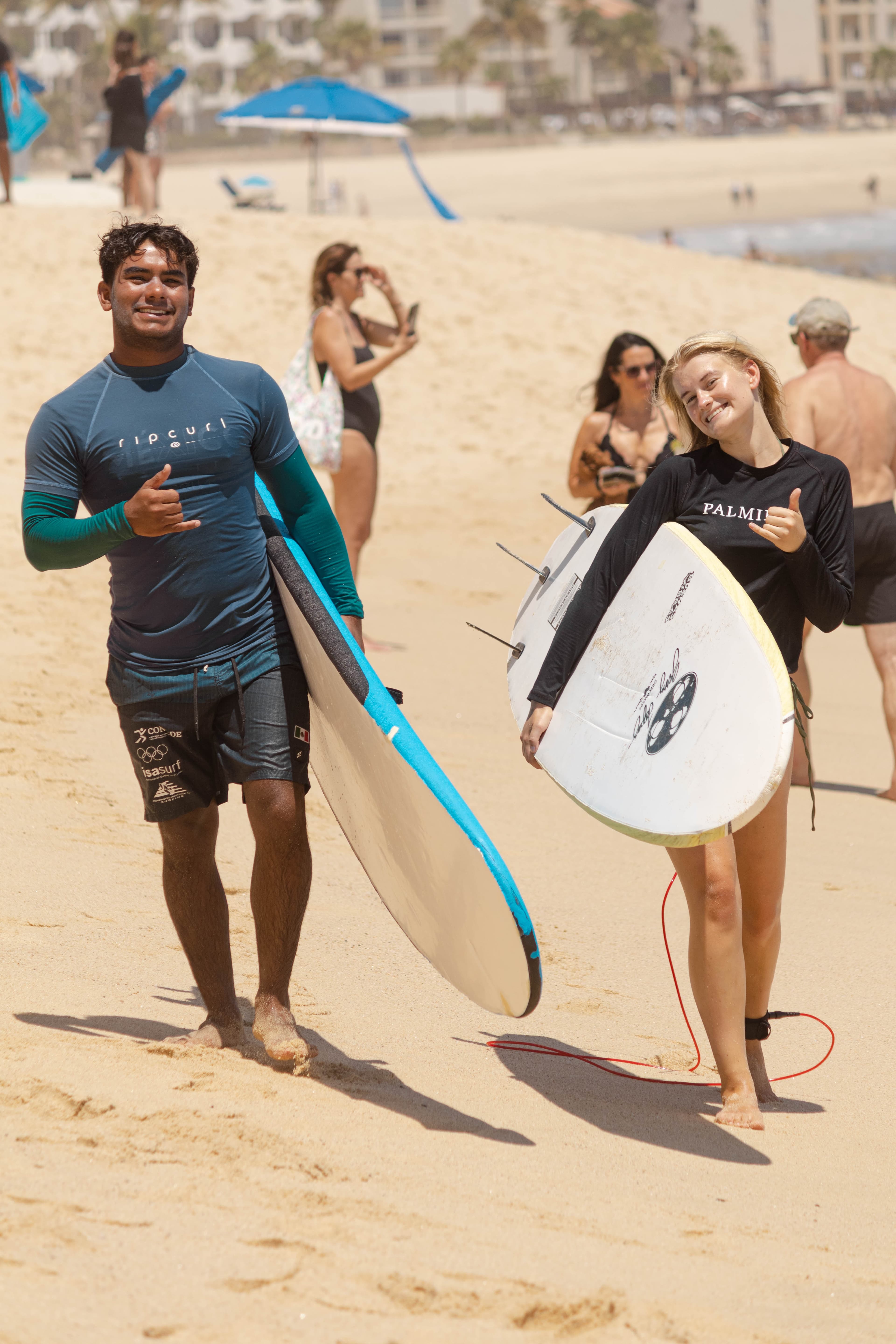
There’s one day that Tlaca goes back to again and again. “A session I’ll never forget was the first time I arrived in Baja Sur when I was 15 years old, after having lived in Mexico City for three years.” Three years away from the sea, carrying the damp nostalgia of Cancún in a city with no waves.
When he finally returned to Baja, his aunt met him. There was no long speech or ceremony, just a gesture that changed everything: “My aunt welcomed me, gave me a board, and said, ‘Get in and surf.’” That direct invitation put him face to face with his own fear. “Without having surfed for three years, I was scared, because that same day there was a storm,” he recalls.
The conditions were intimidating: “The waves were a little intimidating, a new spot, new people, new place.” Even so, he went in. He was in the water for around two hours and barely caught two waves: “One at the beginning and the last one, which I rode all the way to the sand because I already wanted to get out.” It wasn’t a session full of maneuvers, but of reconnection. That last wave, which he rode to the sand almost out of the need to leave, ended up being the spark: “With that, I got motivated to keep giving it my all, to keep training, and to keep surfing.” Since then, he knows that coming back after fear is also part of surfing.
In David’s words
“The sea has always meant respect; Mother Nature gives and takes, but the sea always gives.”
David Hernandez, about what the ocean taught him
IV · The magic of Baja
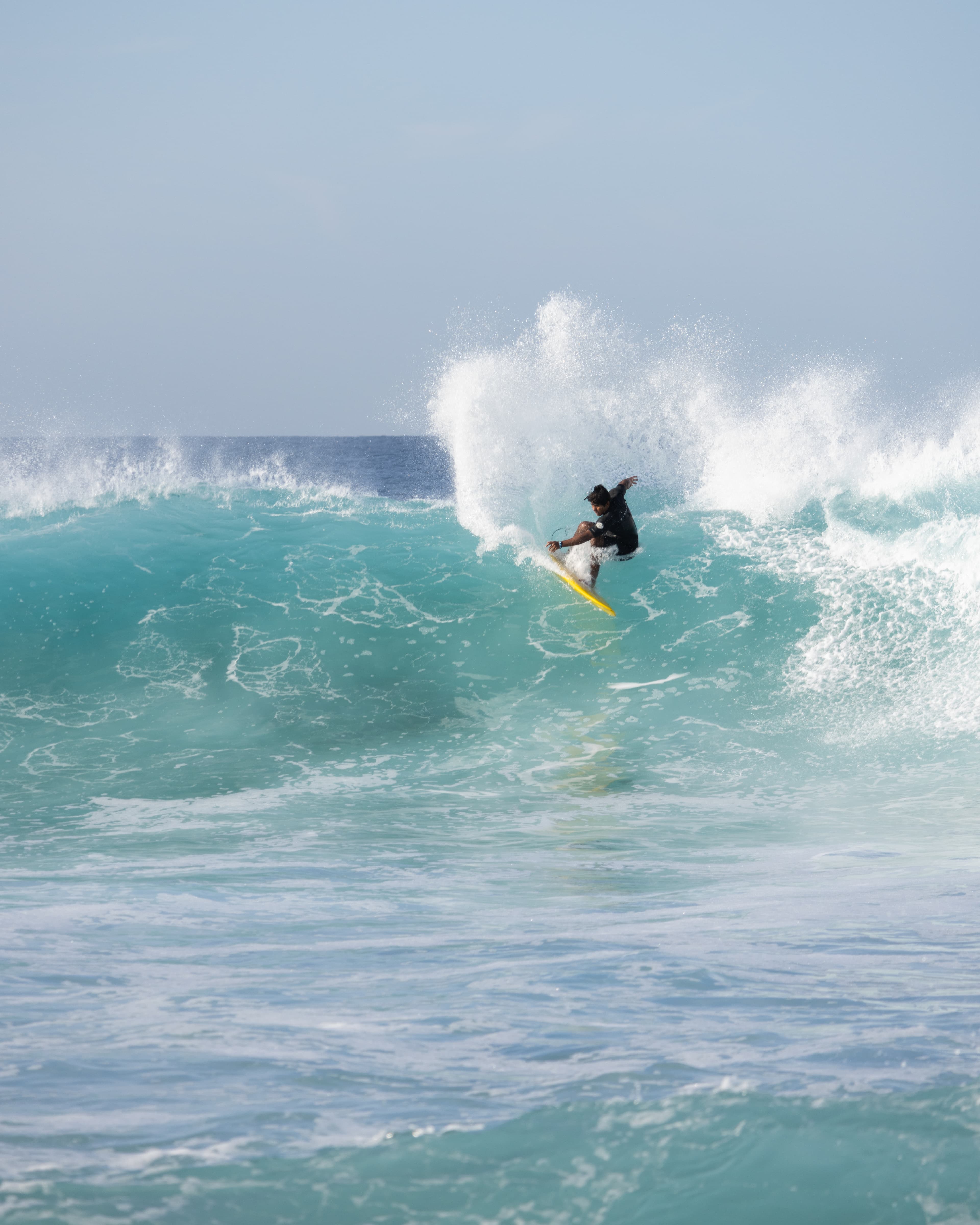
Today Tlaca lives in Baja, and when he talks about this place he does it with a mix of gratitude and quiet amazement. What he emphasizes most is not just the quality of the waves, but their consistency: “I currently live in Baja and the magic of Baja California Sur is that we have waves all year round, everywhere.” That continuity allows him something that to him is essential: organizing life around getting into the sea.
But it wasn’t only the sea that made him stay. He talks about the local culture with a respect that feels close: “The culture here, the people are super friendly, open-hearted, strong-hearted, and that’s what caught me.” He sums up the place where he lives as “a small town near the coast, where there’s also surf.” That mix of simplicity, community, and waves became his everyday backdrop.
From Cancún to Mexico City and then to Baja, the compass has always led him back to the water. Here he found not only a home, but a way to share what the sea gave him. In his words, “today I am the person I am thanks to my family and the sea.” Baja, with its own rhythm and that small coastal town feeling, is the point where those two forces meet: the memory of those who pushed him forward and the ocean he returns to every day.
V · What each wave teaches
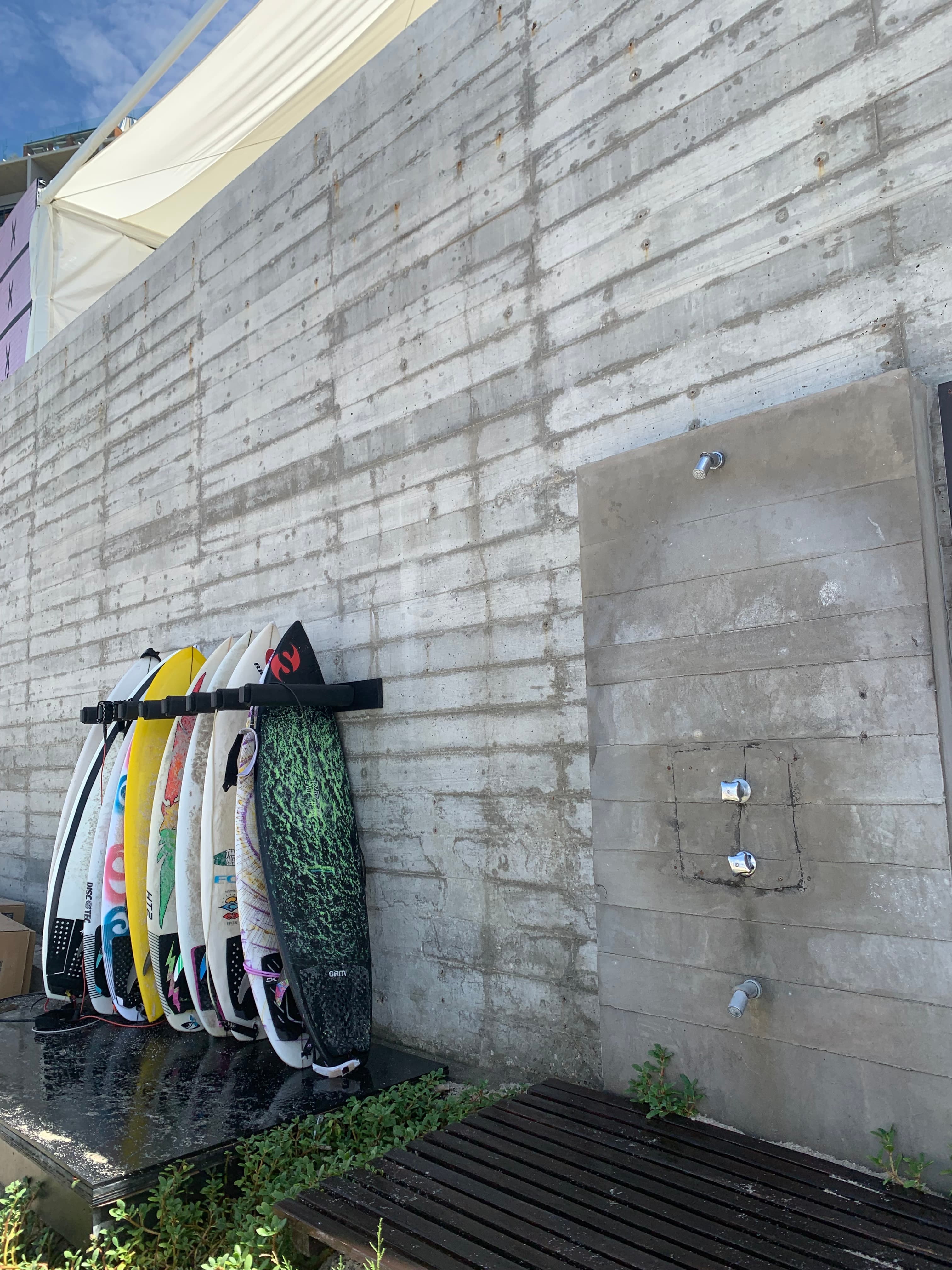
In his surf classes, Tlaca tries to pass on to his students everything that took him years to understand: respect, observation, and also enjoyment. His sessions are private, designed so that the person feels supported from start to finish, whether in 1, 1.5, or 2-hour classes. He chooses the time and place according to the conditions and the student’s level, “from your first wave to improving your technique.”
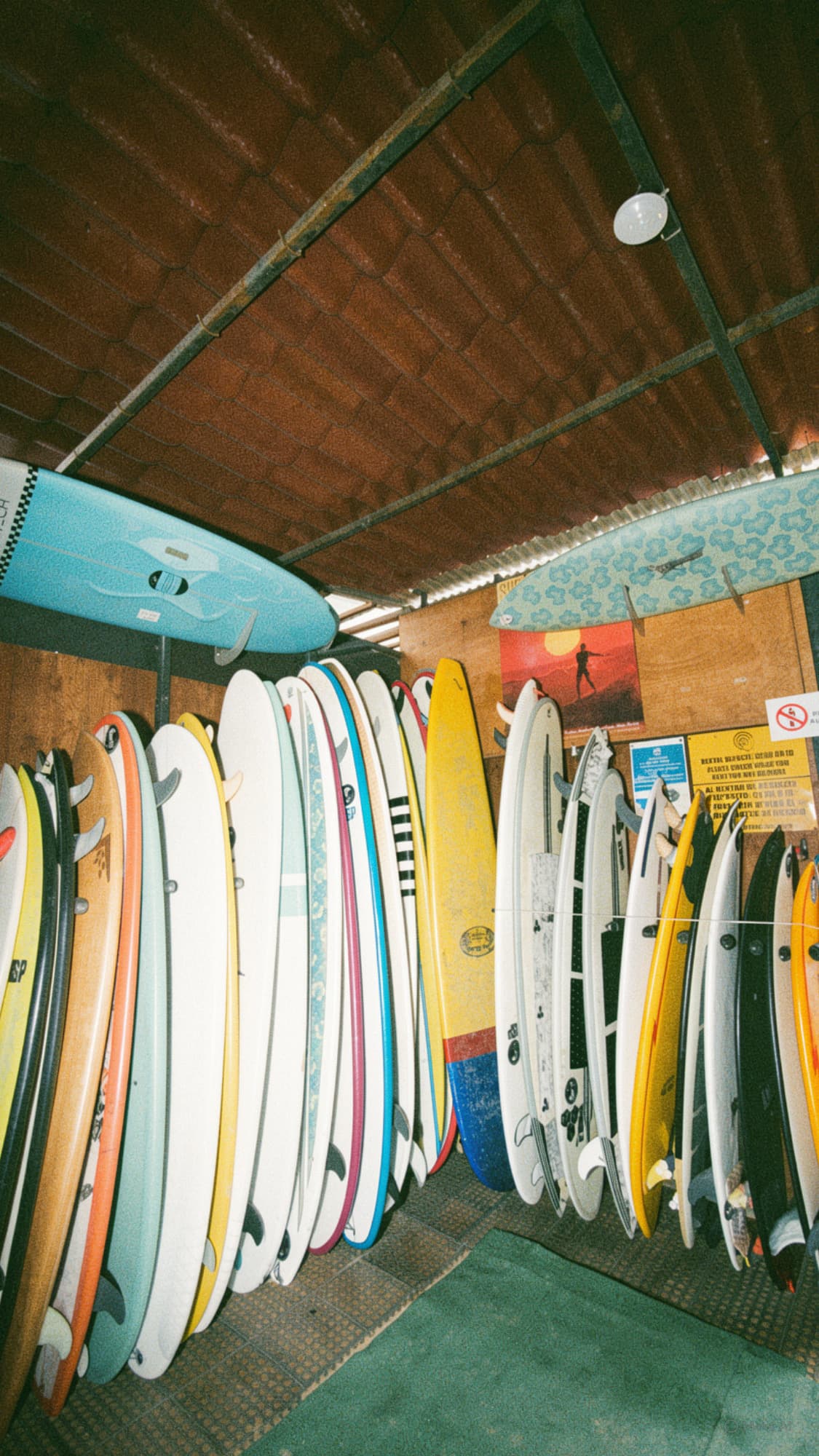
Before getting in the water, he takes care of the practical side: he brings the board and the rashguard; the student just has to show up with water, sunscreen, swimsuit and, as he says, “a positive attitude. That’s all you need. I’ll bring the board.” He even recommends watching a few short videos before the class so that the first contact isn’t totally unfamiliar, and he puts special emphasis on making sure they watch one about “surf etiquette,” to learn to respect turns and lineups.
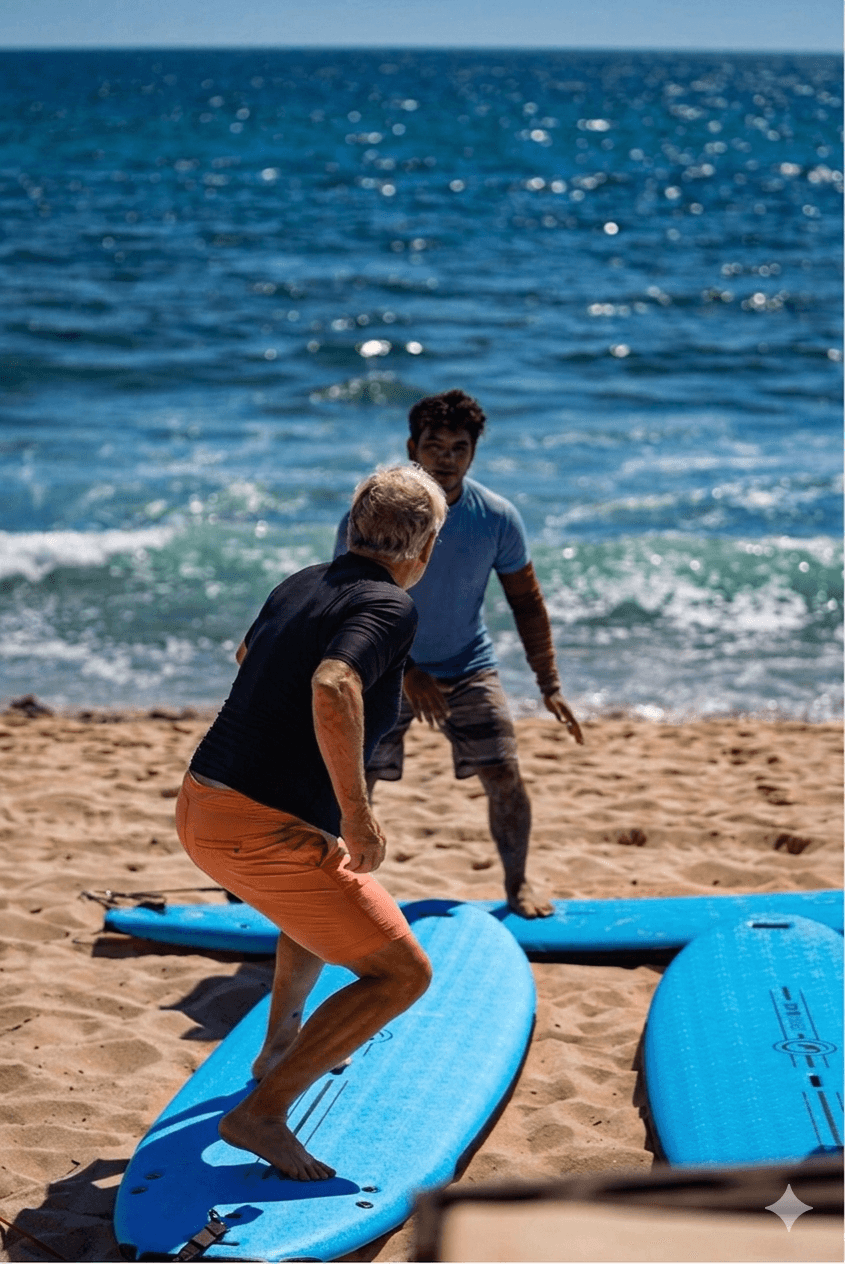
He thinks a lot about people who have never touched a board. One of his offerings is “especially for people who have never surfed and want to experience connecting with the sea for the first time.” He calmly explains how to lie down, paddle, stand up, and above all how to fall without getting scared. For those who have already had one or two encounters with the waves and feel in good physical shape, he suggests longer sessions, even with a ten-minute break halfway through. That way, each class is adapted, but it keeps a clear base: safety, clarity, and the idea that surfing is also playing.
VI · A day in the water with Tlaca
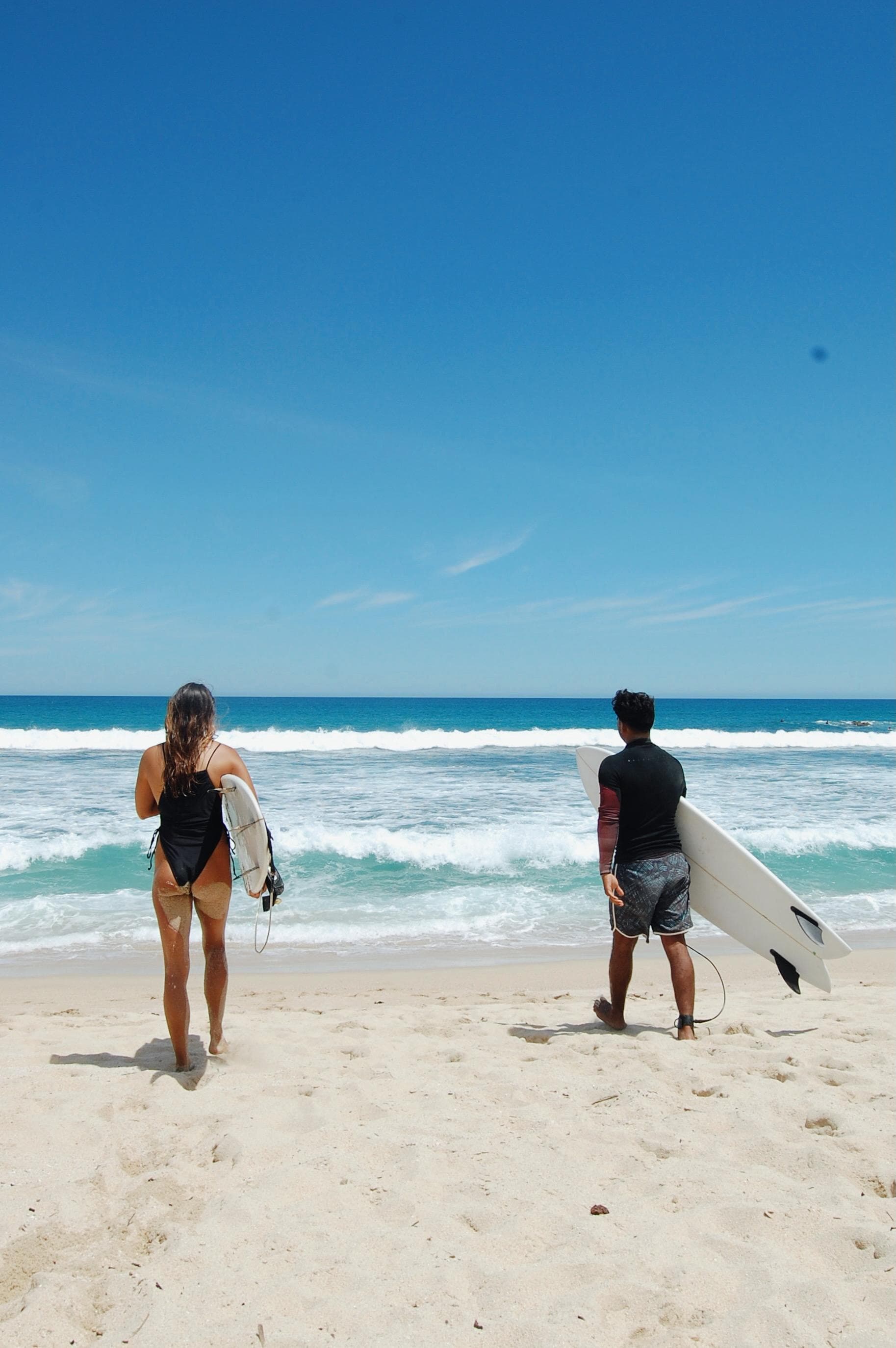
Arriving to a class with Tlaca is stepping into a small ritual that starts long before the first wave. He asks people to get there with enough time to watch the sea, see how the sets come in, how the other surfers position themselves. From there he starts explaining why he chose that place and that time of day, what current is running, where it feels safest to start.
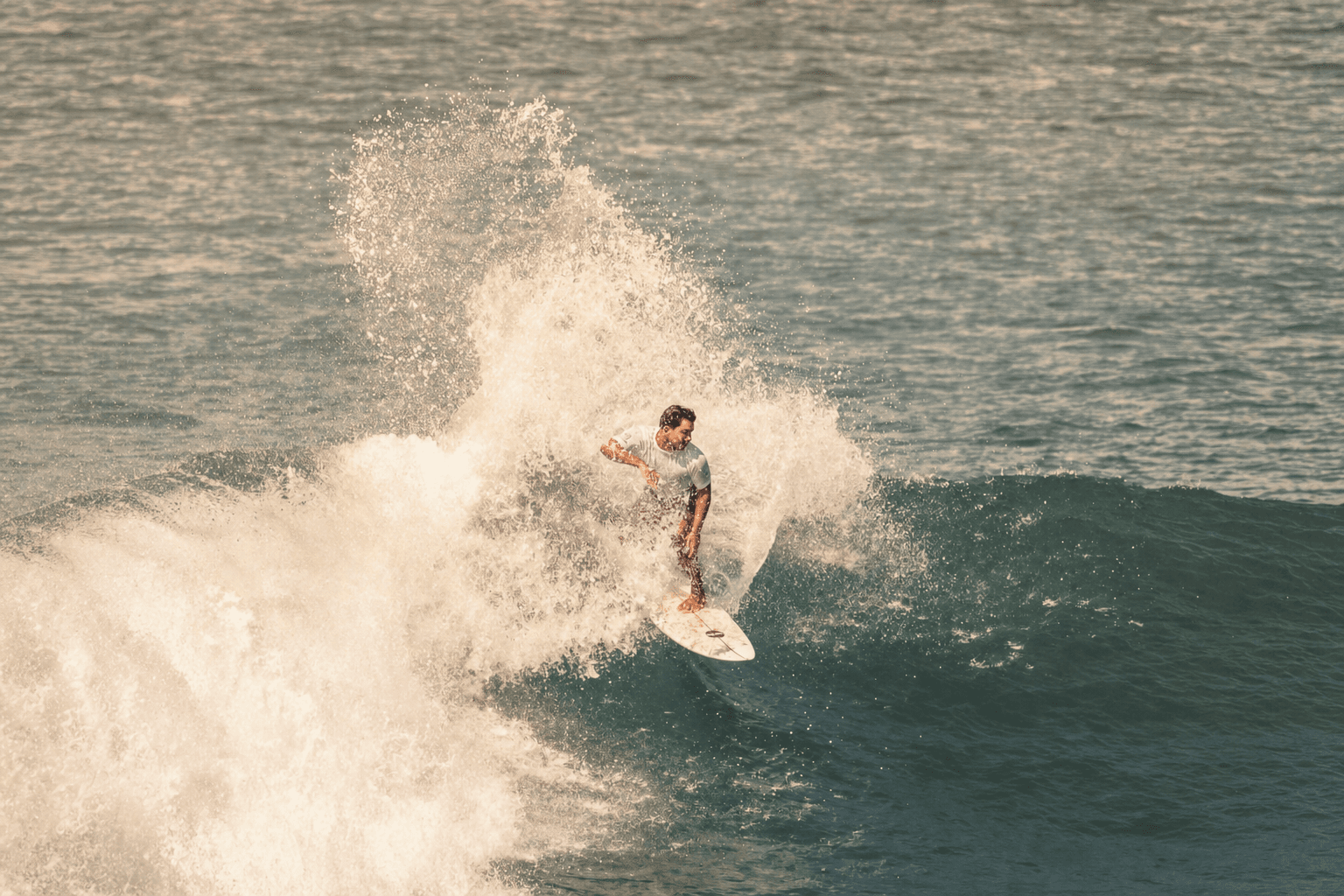
On the sand he gives a clear introduction: simple warm-up, stances, how to position yourself on the board and how to stand up step by step. He doesn’t try to overload with theory, but to let the body memorize the basics. Then comes what he likes most: guiding the person as they cross the shorebreak, reading the rhythm of the waves together and, when the right set comes, pushing the board and telling them to stand up.
Between waves, he makes room to talk: what went well, what can be adjusted, how to breathe more calmly. If the session is longer, he suggests a short break after an hour to drink water, check in on how they’re feeling, and go back in with more energy. Throughout the whole time, he’s right there, close by, reading the sea and people’s faces, encouraging when frustration shows up and celebrating every extra meter ridden. The goal is not just for someone to stand up on a wave, but for them to leave the water wanting to “come back tomorrow,” with that feeling that something new has opened up and now also belongs to their story.
VII · The Baja vibe he wants to share
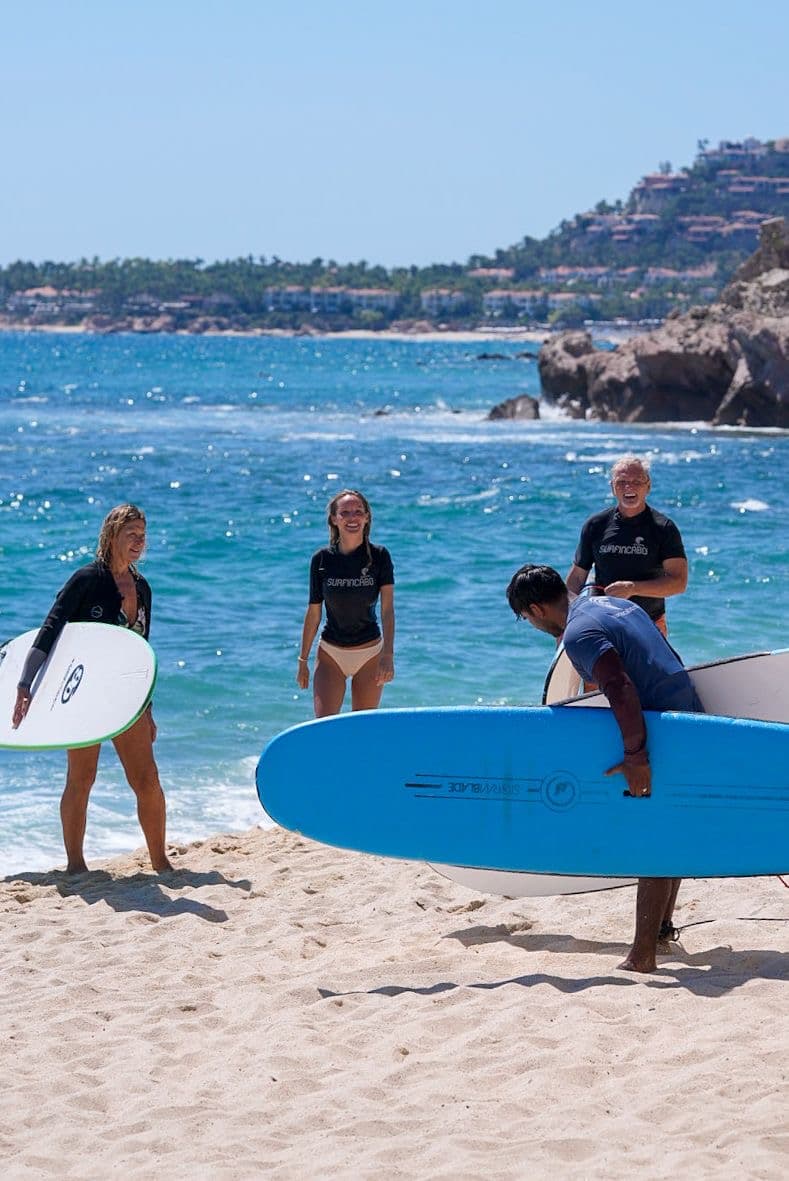
When Tlaca talks about what he enjoys most about being an instructor, he almost always ends up talking about community. “What I like to share with the people who take classes with me, who go surf with me, whether friends or clients or acquaintances, is to always make clear to them the, the vibe that Baja has, you know?” That vibe he talks about wouldn’t fit in a single word, but he breaks it down.
He describes it as a simple sequence: “Going, surfing, driving, getting to know people, being friendly with everyone, sharing, getting out of the water and sharing our experience, who caught the best wave, if you saw it, if you didn’t, what the plan is going to be after that, we’ve got to come back tomorrow.” For him, that chain of moments, from getting in the car to saying goodbye, is as much a part of surfing as paddling or standing up.
In that way of seeing things, a good wave doesn’t end when you reach the shore. It continues in the conversation afterward, in the jokes about who almost fell, in remembering that perfect set someone else caught. That’s what he aims to share with both his longtime friends and anyone who meets him for the first time in a class: that the sea is better enjoyed when it’s shared. In the end, he says the best part of his job is exactly that: “Being able to share with people, with the people who, who I know and who I see every day is the best thing for me.” Baja gave him waves all year and a community with open hearts; in return, he makes it his job to bring more people into that current.
Gallery
3 frames
Surf with David