
Stories · Ensenada, Baja California Norte, Bacalar
The Woman Who Chose Alignment
Born with the Baja coast as her compass, Paulina Carlón crossed continents for yoga and came home to guide people toward a quieter, kinder way of being in their own bodies.
Palmilla
8 minute read
I · Roots in Baja
Paulina Carlón was born in Ensenada, Baja California, and for her, that single fact explains almost everything that came after. She says she "grew up with the ocean," not as a distant view but as a daily presence. The shoreline, the long horizons, and the people in the water became the backdrop of her childhood. "I grew up watching sunsets, watching surfers," she recalls, "and there is where I found home and complete." The grammar might tangle a little, but the feeling is clear: the combination of sea and sky was the first place that made sense to her.
She talks about Baja as if it were a living relative. "I was born in Baja, Baja California Norte," she says, repeating it as if to reaffirm a fact she never wants to lose. As a child, she traveled the length of the peninsula, "from Tijuana to Ensenada, Santa Rosalía, Mulegé," stringing together a map made of memory rather than road names. Those drives stitched together "all those beautiful places, all those beautiful beaches, all those beautiful deserts" into something she simply calls home.
Even when she left for other cities and countries, that early geography stayed under her feet. She has lived "in different places, in different cities," but she insists the energy of Baja itself is what anchors her. "The energy of Baja, it's very healing and grounded for me. That's why I decided to create my roots here." For her, returning was not retreat. It was a decision to stand where she had always felt most aligned.

II · Lost at University
The path that led Paulina back to Baja did not begin on a beach. It began in a university classroom, far from the quiet rhythm of the tides. She remembers that period without romance. "I start my practice of yoga in university where I felt lonely and anxious and couldn't understand what I really wanted in life," she says. The uncertainty was not abstract; it lived in her chest and her schedule, in the mismatch between what she was studying and what she felt inside.
In the middle of that confusion, there was one person who seemed to move differently through the world: her yoga teacher. Watching them, she noticed something she could not find in her own days. "Watching my teacher of yoga inspire me to be a happier person, a kind person," she remembers, the sentence trailing but the meaning solid. It was not only the postures that drew her, but the idea that you could become softer and clearer through this practice, even when nothing else around you changed.
The mat became a place where the questions were allowed to stay unanswered. University still demanded deadlines and grades, but yoga invited breath and awareness. That contrast started to work on her quietly. Without calling it a decision yet, she kept returning to the practice that left her feeling more like herself. The girl who grew up watching surfers move with the swell was now learning how her own body could move with her breath, and for the first time since leaving home, the word "complete" came back into reach.
III · Choosing a Different Life
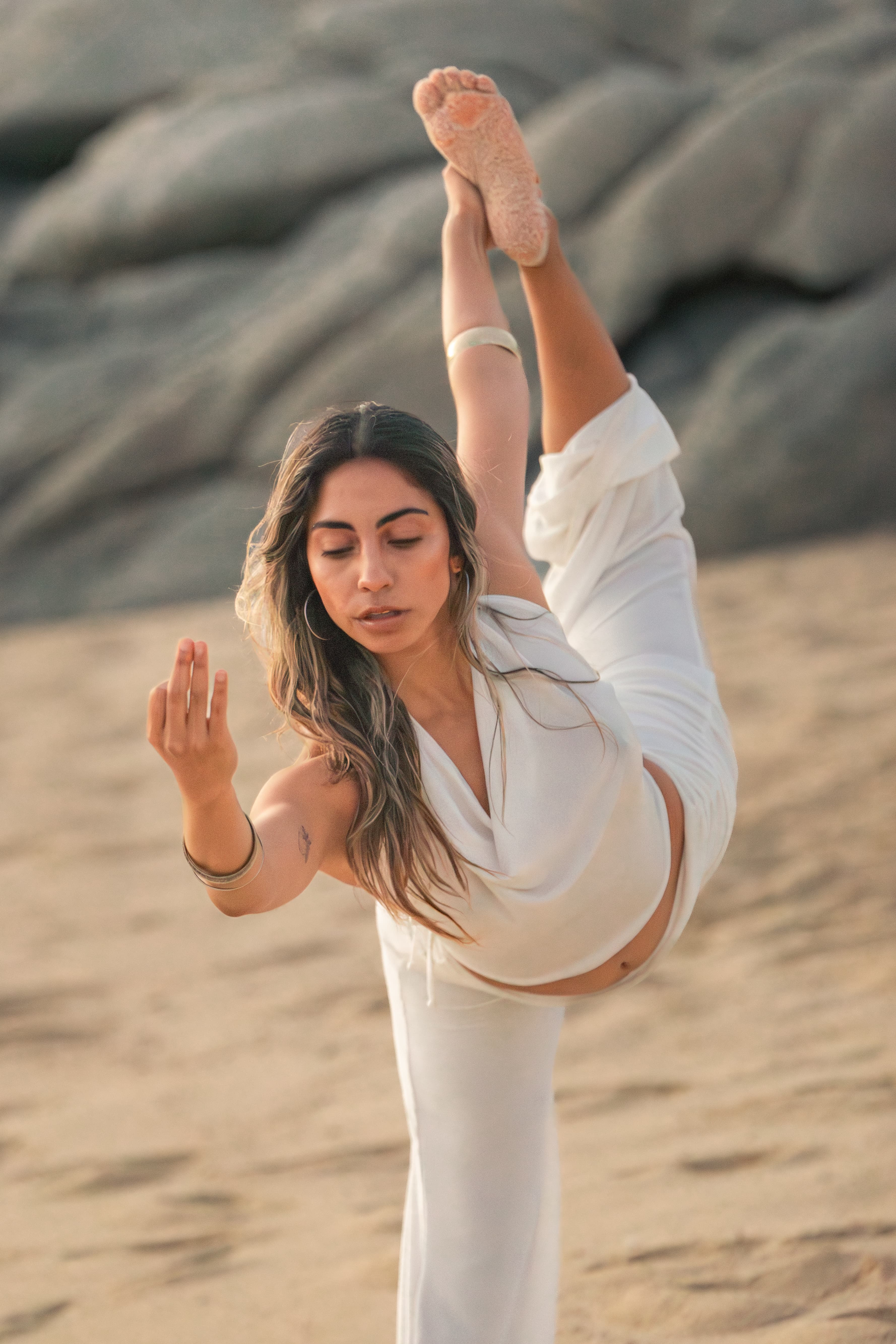
Paulina did not abandon her studies. She pushed through and completed her degree, a choice that still matters to how she sees the world. Even so, another education was unfolding in parallel. During the pandemic, when so much of life shifted onto screens, she took her first yoga certification online. "During pandemics, I took my first certification online," she says simply, as if describing a small step. But that step was a quiet declaration that yoga was more than a hobby.
The certification gave structure to what had been instinctive. Anatomy, sequencing, philosophy—she learned how to hold space for others, even through a laptop camera. At the same time, finishing the degree proved something else: she could meet external expectations. That done, she began to ask what she wanted, beyond what she had been trained to do.
When the world opened enough for travel again, she did not look for an office job. "Then I finished my environmental engineer degree and decided to travel all around the world, Europe, Thailand, India," she says. The list lands without drama, but underneath it is a clear pivot. With a stable profession in hand, she chose to follow the thread that had pulled her out of loneliness in university. The engineer stepped onto a different kind of project: understanding herself.
Looking back, she sums that shift in one sentence that could be a kind of thesis for her life: "I just realized that the biggest achievement in life is to be true to yourself and align on what you do." It is simple, but it cost miles, questions, and a lot of unlearning.
IV · Rishikesh and the Inner Landscape
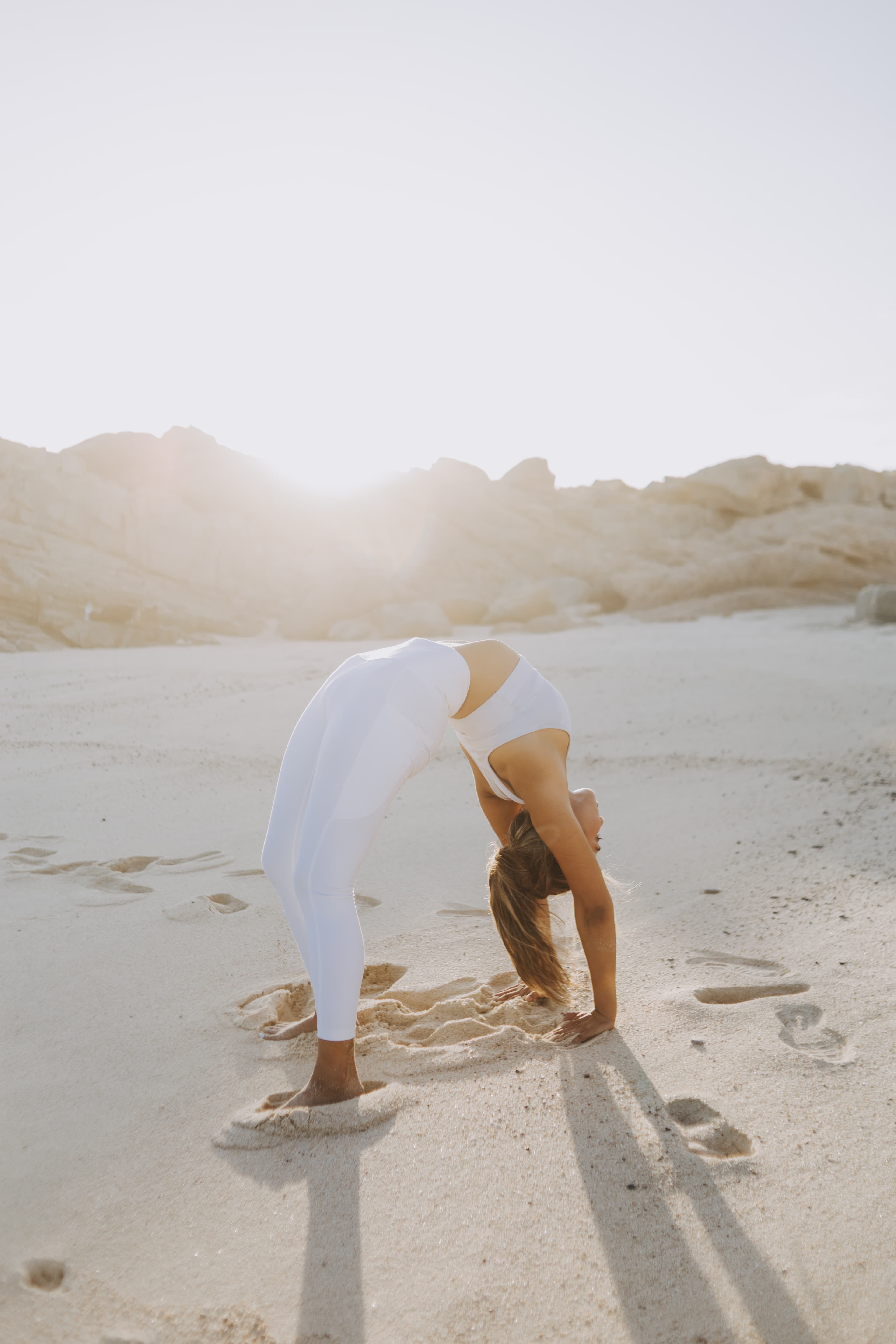
India was not a romantic backdrop for Paulina; it was a classroom. In Rishikesh, which she calls "the capital of the yoga," she took another certification that deepened everything she thought she knew. The city’s reputation as a center of practice gave her access to teachers and traditions she had only read about before. The days revolved around study and practice rather than exams and grades.
What she found there was not a new identity, but a clearer version of the one she had been carrying since those first nervous university classes. In Rishikesh, she says, she "found this deep connection with my inner self and nature," and the way she repeats inner self and nature together shows how tightly she now knots the two. For her, they are inseparable. When she speaks of feeling secure, it is not in terms of money or status. "It is the only place I feel secure and in home, on home," she says, correcting herself mid-sentence, searching for words big enough for the feeling.
The concept of alignment took on new layers. It was no longer just about where her shoulders sat over her wrists, but whether her choices sat over her truth. "I just realized that the biggest achievement in life is to be true to yourself and align on what you do," she repeats. That realization is less about India as a destination and more about what happens when you strip away distractions. For Paulina, the mat became a mirror, and in that mirror she saw a life that did not fit inside an office.
By the time she left, she was not looking for an escape. She was looking for ways to bring what she had learned back to the people and landscapes that had formed her.
In Paulina’s words
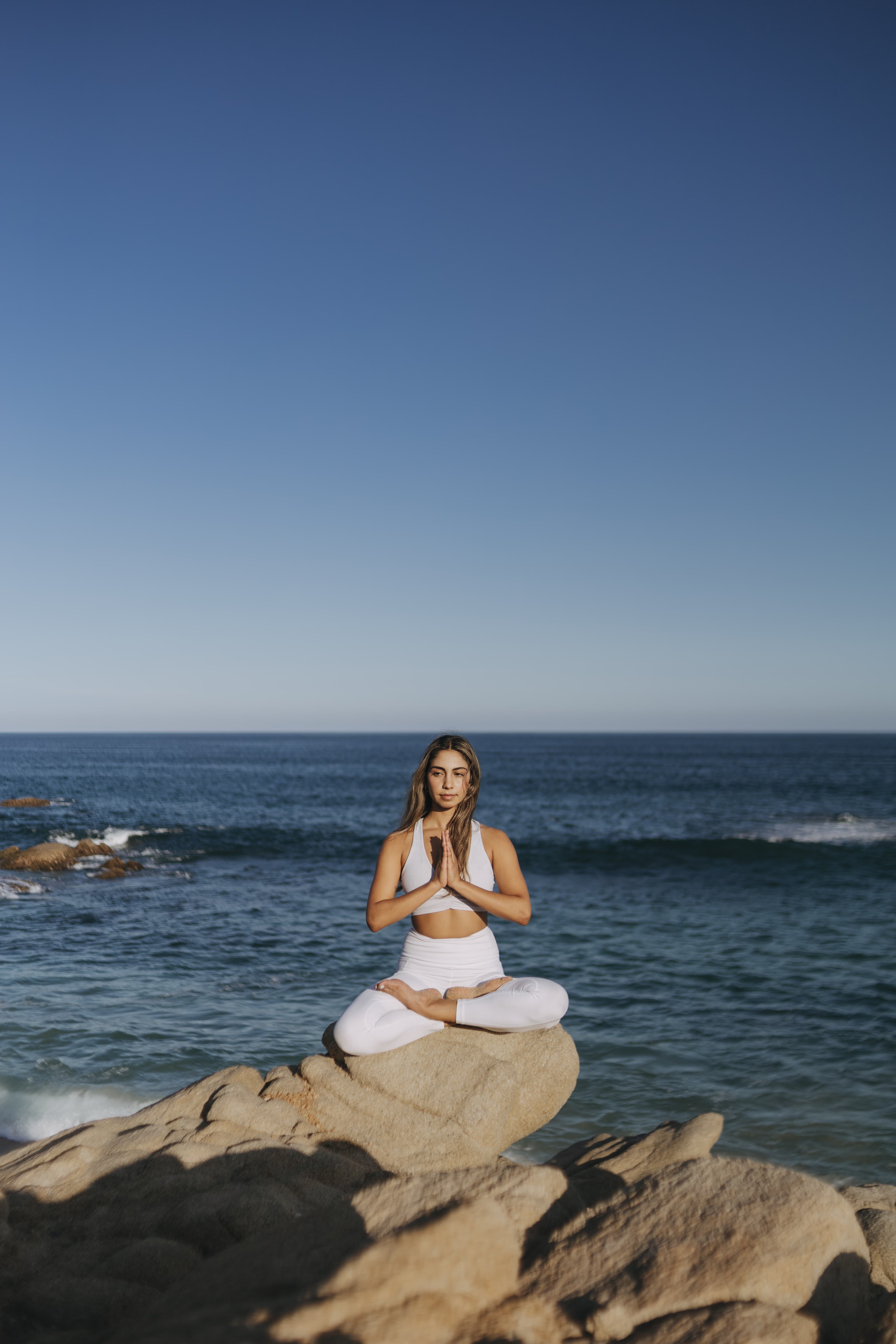
“The biggest achievement in life is to be true to yourself.”
Paulina Carlón, on choosing yoga over expectations
V · Nights by the Lagoon
Before returning to Baja for good, Paulina spent a chapter of her life in Bacalar, in Quintana Roo. There, she worked as a yoga instructor in a boutique hotel, guiding guests who came for calm water and quiet days. But the deepest parts of that period unfolded after work, when the classes were done and the lagoon was mostly left to itself.
"I was living in Bacalar in Quintana Roo. I was a yoga instructor in a hotel boutique over there," she recalls. "And when it was night, I always went to this port of the lagoon and do my yoga practice and my meditation." Away from schedules and expectations, she would move and breathe on the wooden boards, the dark water beside her. Sometimes the stillness went so deep that sleep arrived uninvited. "Sometimes I just fell asleep there because I felt so in peace and calm and quiet," she says.
One night stays with her more than the others, a kind of hinge in her story. She remembers sitting next to the lagoon, "talking to the stars, talking to the moon," and then something shifted. "I just heard a voice inside of me and of the moon saying that any desire I had, it will be always supported of the love of the mother nature," she says. The phrasing is unusual, but the meaning is precise. She felt, maybe for the first time, that she was not doing this alone.
"I think that's such a deep and inspiring support that allows me to explore this version of myself," she explains, "and just be a channel between the cosmos, the divinity, the nature speaking through our physical world." For her, that night at the lagoon was less a mystical exception and more a confirmation: if she moved in alignment with what was true for her, the natural world that had cradled her since Ensenada would keep holding her.

VI · Coming Home to Baja
All those experiences—university loneliness, online trainings, India, Bacalar nights—eventually pointed in the same direction: back to Baja. "I've been living in different places, in different cities," Paulina says, acknowledging that she needed those distances to understand what home meant. But the pull of the peninsula never faded. "The energy of Baja, it's very healing and grounded for me. That's why I decided to create my roots here."
Now based in the region often called Baja Sur, she introduces herself openly: a yoga, mat Pilates, and holistic facilitator. The environmental engineer is still there in the way she reads landscapes and respects ecosystems, but her daily work happens human-to-human. She offers "yoga and holistic experiences" and describes her background in terms of awareness rather than achievements. "My journey is rooted in awareness," she writes in her bio, and that awareness is what she tries to invite others into.
Her decision to center her life here is not nostalgic. Baja, with its deserts and beaches and long drives from Tijuana to Mulegé, taught her early what it felt like to be small and safe at the same time. Returning as an adult, she brings new tools: breathwork, movement, the capacity to hold space for grief, joy, and everything between. She calls Baja healing and grounded, and then quietly offers herself as part of that grounding.
In her own words, she feels "this deep connection with my inner self and nature," and Baja is where those two meet most clearly. Coming back was a structural choice: to build a life where the external landscape matches her internal one.
VII · A Day on the Mat
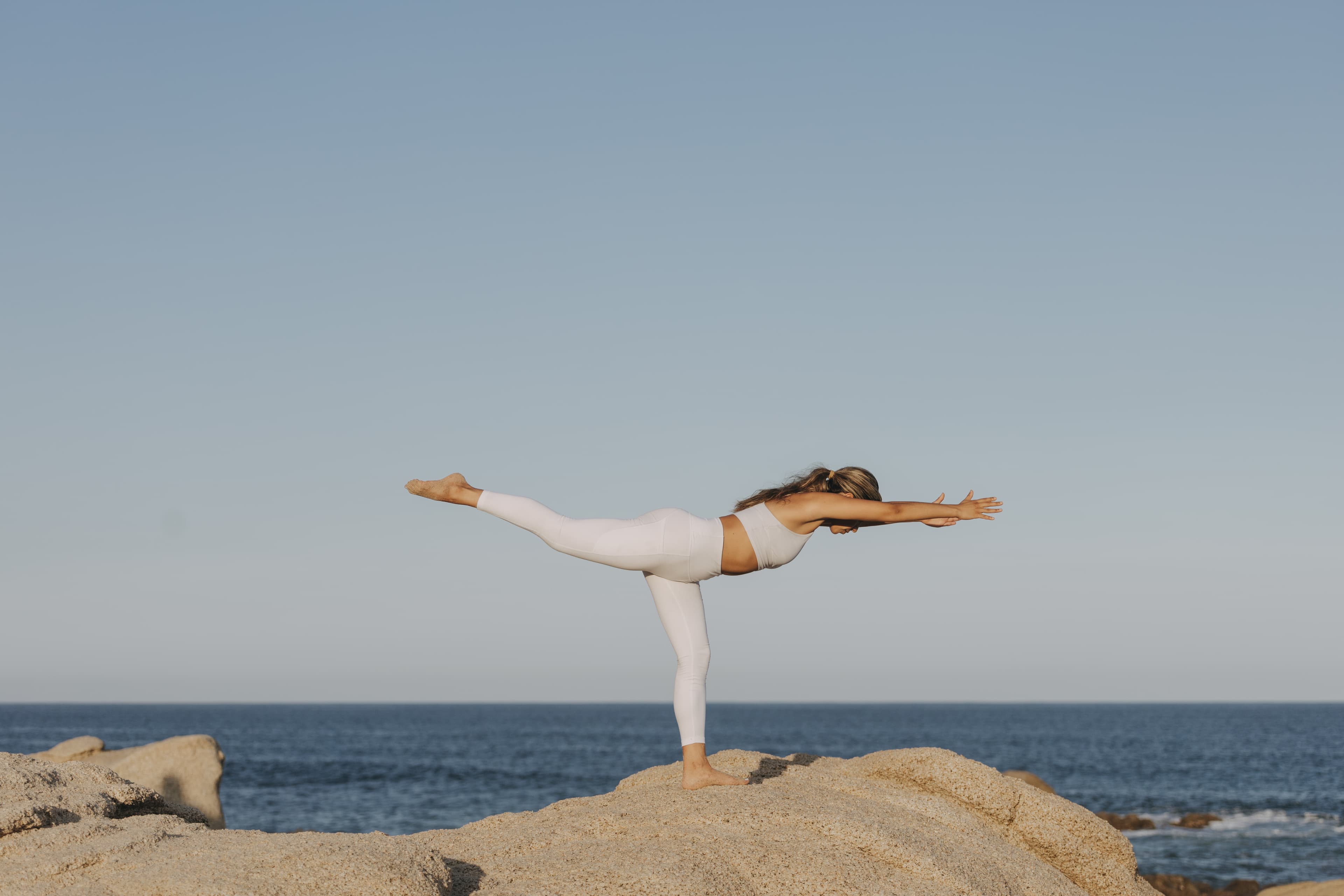
Spend a morning or evening with Paulina and the first thing you notice is how practical her offerings are. She is clear that no experience is required. "I adapt every session to your level, from complete beginner up," she tells guests. "Tell me where you’re at and we’ll start there." That starting point might be a private beach yoga session at sunrise or sunset, a mat Pilates class focused on core and posture, or a one-on-one personal training hour to keep a routine alive on vacation.
Logistics are simple. "Usually on the beach, or I can come to your hotel or rental," she says. Once a booking is made, she messages to agree on the exact spot and time. She brings the mats and any equipment; guests just need "water, sunscreen, and comfortable clothes." Even that small detail reflects her environmental background and her life under intense sun. The work happens in real bodies, under a real sky.
Her descriptions are modest but reveal how she thinks. A personal training session is "built around your goals—strength, conditioning, or keeping your routine alive on vacation." A Pilates class is "focused on core, posture, and control, adapted to your level," and can unfold "on the beach or wherever you're staying." The beach yoga is "matched to your level" and set on the sand, so the element that raised her—ocean and horizon—now holds her students too.
She also keeps space flexible. Partners or friends can join as long as the group size matches the listing. Plans change on holiday; she knows this. "Message me and we’ll find a time that works," she reassures. "Plans move around on vacation—no stress." Underneath the spiritual language, there is an organizer, making sure the container is solid enough for people to let go.

VIII · Permission to Be Everything
When Paulina talks about why she teaches, the answer comes fast and clear. "What I just feel is my purpose in this life is just to make the people feel in peace," she says. Peace, for her, is not a blank calm. It is a place where people can bring the parts of themselves they usually hide. She wants to be "a safety place where people can express by talking, by moving, by shaking their bodies."
In her classes, there is no single correct way to show up. "What I would love to transmit is that you can be silly, you can be a child, you can be joyful, you can be angry, you can be crazy, and no one's gonna judge you," she insists. If there is judgment in the room, she believes it comes from inside. "The only person that's gonna judge you is yourself." Her work, then, is to help people see that inner critic and soften its grip.
She encourages students to "be in peace with them and observe themselves without judgment," redirecting their perspective toward "love and acceptance to our reality, in our body, in our physical world." Movement, breathing and being still is, for her, pure medicine. She wants to remind people living in an overstimulated world that these are ancestral tools to come back to themselves and heal pain, worries, and anxiety.
The mat, or the patch of sand, becomes a small experiment: what happens if you let yourself be exactly as you are for an hour? In that field, progress looks different. "It doesn't matter if it's a perfect posture," she says. "It's more about what you relieve energetically."
Across yoga, Pilates, and personal training, that philosophy stays steady. The muscles strengthen, the spine organizes, the breath slows—but the real measure is whether someone leaves feeling a little more at home in themselves. In that sense, Paulina is still doing what Baja did for her as a child: offering a wide, nonjudgmental space where you can be small, honest, and completely held.

Surf with Paulina